1881
History of the Sinking of the RMS Teuton and the Origins of the Society
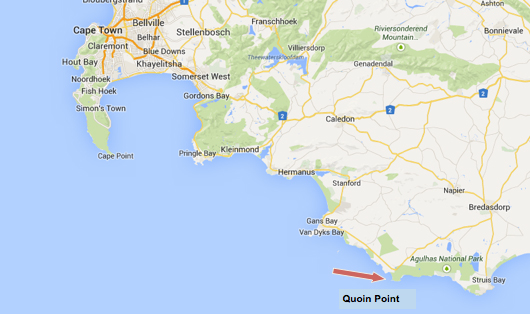
The Society owes its origins to a tragedy: the sinking of the Royal Mail Steamship Teuton off Quoin Point, between Danger Point and Cape Agulhas, on the night of 30 August 1881. The vessel had sailed from Plymouth on 6 August and arrived in Cape Town on 29 August after a calm 23-day voyage. Although many passengers disembarked at Table Bay, 157 continued onward, including numerous families bound for Knysna, Algoa Bay, East London, and Natal.
The Ship and the Disaster
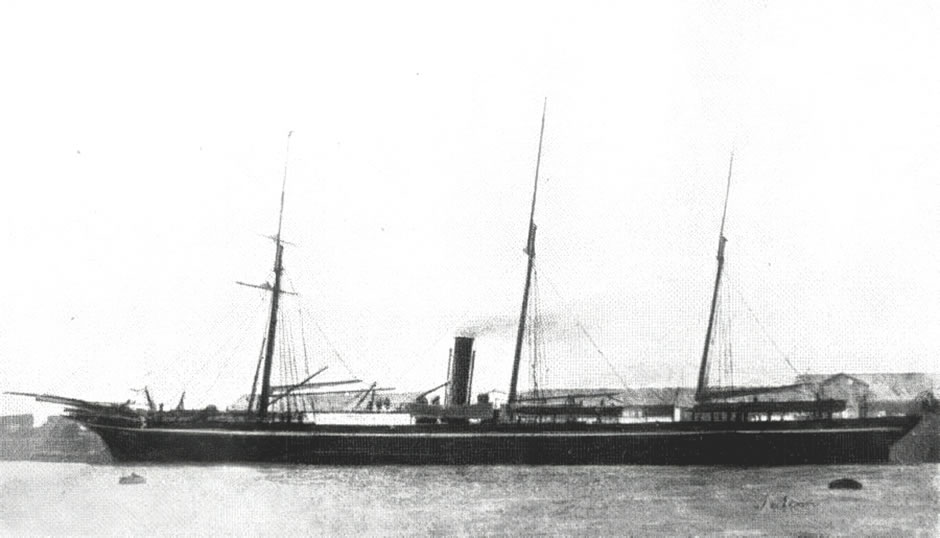
Originally launched in 1869 as the Glenartney for Jardine, Matheson & Co.’s Hong Kong to Calcutta route, the ship had been built at Dumbarton and armed against pirates. She was purchased by the Union Steam Ship Company in 1873, renamed Teuton, fitted for 250 passengers, and later lengthened to 350 feet. Under the command of Captain Edward Manning, a respected and experienced officer, the Teuton left Cape Town again on 30 August 1881 at around 10 a.m., passing Cape Point that afternoon.
At approximately 7 p.m., with the light of Cape Agulhas just visible, the Teuton struck an underwater obstruction. Although the officers initially believed the damage manageable, the situation deteriorated steadily. At 8 p.m., passengers were instructed to be ready for the boats, and by 10:30 p.m. the first boats were lowered. Moments later, the bow dropped sharply, and the vessel foundered with terrifying speed. Survivors described “one awful shriek” as the ship plunged beneath the surface, leaving wreckage and a handful of swimmers struggling in the moonlit water.
Loss of Life
Of the roughly 220 to 226 people on board, only about 36 survived. The loss of women and children was heavy. Only one female passenger survived: 15-year-old (sometimes described as 16-year-old) Elizabeth “Lizzie” Ross of Glasgow.
Lizzie had travelled in third class with her parents and infant sister, hoping for a better life in the Cape. Her father, dissatisfied with Cape Town after landing, had decided they would continue as far as Knysna, a decision that placed the family back aboard the doomed ship. When the Teuton struck, Lizzie was with her parents tending the baby when they felt a dull grating shock. After being summoned to deck, passengers were reassured that there was “no immediate danger.” As the situation worsened, the family was placed in one of the boats; but when the ship suddenly sank, that boat was capsized. Lizzie managed to cling to floating debris until rescued by the carpenter’s boat. Her parents and sister were lost.
Her courage and composure were widely remarked upon. Survivors recalled how clearly she described the doctor keeping order on deck, insisting that women and children be seated first and threatening to knock down any man who disrupted the process. The disaster unfolded so quickly that there was no time for farewells, and no chance to save those still waiting to board the boats.
Aftermath in Simon’s Town and Cape Town
Two open boats reached Simon’s Town the following day, battered by a fierce south-easter. Exhausted survivors were taken to the British Hotel and provided dry clothes and rest. Visitors flocked there in sympathy, though measures were taken to keep survivors from being overwhelmed.
Lizzie Ross, the only female saved, was cared for with great kindness by Mr. and Mrs. Runciman, the local agents of the Union Company. Still in shock and grief, she held out a faint hope that another boat carrying her family might have escaped, though no such boat was ever found.
Transferred to Cape Town, Lizzie came under the guardianship of the minister and elders of St Andrew’s Presbyterian Church, where she was fostered by the Runciman family. In time, she was educated and later became a teacher.
From Tragedy to Community: The Founding of the Society
The sinking of the Teuton hit Cape Town’s Scottish community hard. Many had known the passengers, followed the news anxiously, or helped with the recovery. It showed how much the Scots in the Cape needed to look after one another and keep their traditions alive, especially in difficult times.
In response, the community formally constituted the Society in 1881 with a purpose “to give aid and pecuniary help to those who require it under distressing circumstances.” At its first Council meeting on 6 October 1881, it was resolved to hold a St Andrew’s Night celebration that November to raise funds, followed by a Burns Night Supper in February 1882, which drew nearly all Scots in Cape Town. At that time, only men were permitted to attend, while women watched from the surrounding balconies, a practice that later changed as women became full members.
Legacy
The wreck of the RMS Teuton was one of the worst the Cape has seen. The fellowship it gave rise to is what the Society was built on, and what it still stands for today.